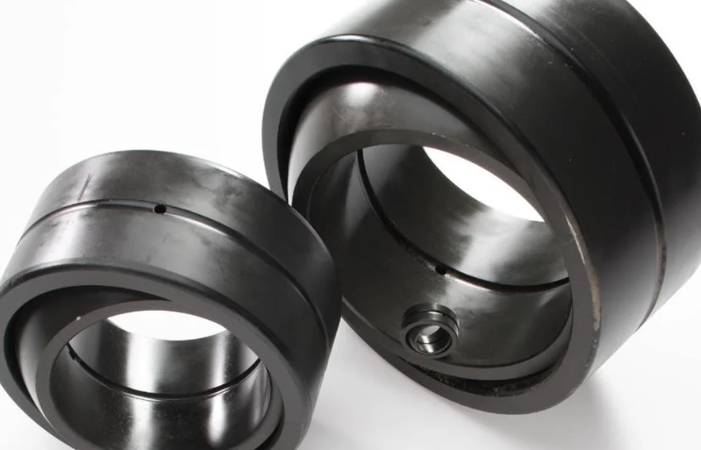
When it comes to engineering and industrial machinery, components that ensure smooth, reliable movement under various loads are essential. One such crucial part is the spherical plain bearing. Though they may not always be in the spotlight, these bearings are indispensable in many applications, offering unique solutions for motion control, load management, and durability. In this blog post, we’ll explore what spherical plain bearings are, how they work, and why they’re the preferred choice for specific applications. We’ll also discuss how choosing high-quality spherical plain bearings can significantly improve the performance and lifespan of your machinery. What Is a Spherical Plain Bearing? A spherical plain bearing (also known as a spherical bearing or self-aligning bearing) is a type of bearing that is designed to support rotary or oscillatory movements while accommodating angular misalignment between the shaft and housing. Unlike traditional bearings that rely on a fixed alignment, spherical plain bearings can operate even when there is some degree of misalignment between the two surfaces. Spherical plain bearings consist of two main components: Outer Ring: The part of the bearing that provides the bearing surface for the inner part. Inner Ring: The component that has a spherical surface, allowing it to move freely and align with the outer ring’s curvature. These bearings typically feature sliding surfaces made of steel, bronze, or PTFE (polytetrafluoroethylene), depending on the specific requirements of the application. How Do Spherical Plain Bearings Work? Spherical plain bearings are designed to handle complex motion. The unique feature of a spherical bearing is that it has a spherical raceway that allows for relative motion between the inner and outer rings in multiple directions. This makes them ideal for situations where: The axis of rotation is subject to misalignment or angular displacement. The bearing needs to support high radial and axial loads. There is a requirement for smooth, oscillating motion or low-speed motion over extended periods. For example, when a shaft moves within the bearing, the inner ring pivots inside the spherical outer ring, allowing the shaft to shift in multiple directions without causing wear or excessive friction. In this way, spherical plain bearings help ensure continuous operation in systems that experience dynamic motion and alignment changes. Types of Spherical Plain Bearings Spherical plain bearings come in several variations, depending on the application requirements: 1. Metal-Polymer Bearings These bearings feature an inner metal ring and an outer ring made of a special polymer material, such as PTFE. The polymer provides low friction, excellent wear resistance, and reduces the need for lubrication, making them ideal for situations where lubrication might be challenging to maintain. 2. Steel-Steel Bearings These spherical bearings are made entirely from steel, offering high load-bearing capacity and durability. They are best suited for heavy-duty applications where high radial and axial loads are expected, such as in industrial machinery, automotive systems, and construction equipment. 3. Self-Lubricating Bearings A type of spherical plain bearing that uses materials such as PTFE or graphite to provide self-lubrication, ensuring smooth operation without the need for external lubrication. These are particularly useful in environments where adding grease or oil is impractical or undesirable. Why Choose Spherical Plain Bearings? Spherical plain bearings are favored in industries and applications where traditional bearings would fail due to misalignment, oscillation, or complex movement. Below are some of the key benefits of using spherical plain bearings: 1. Ability to Accommodate Misalignment One of the primary advantages of spherical plain bearings is their ability to handle angular misalignment between the shaft and housing. This flexibility is especially beneficial in heavy machinery, construction equipment, and other applications where misalignment is inevitable due to mechanical stress or deformation over time. 2. High Load Capacity Spherical plain bearings are designed to carry high radial and axial loads, making them ideal for use in demanding applications where large forces are at play. Their robust design allows them to manage heavy-duty tasks without compromising on performance. 3. Low Maintenance Requirements Certain types of spherical plain bearings, particularly self-lubricating and metal-polymer versions, require minimal maintenance. Their built-in lubrication reduces the need for external maintenance, ensuring longer service intervals and lower operational costs. 4. Durability in Harsh Environments Spherical plain bearings are built to withstand harsh conditions such as high temperatures, shock loads, or exposure to corrosive substances. This makes them suitable for use in industries like construction, mining, agriculture, and aerospace, where equipment is often subject to extreme environments. 5. Smooth, Controlled Motion Spherical plain bearings provide smooth, controlled movement in oscillating or rotating parts. Their ability to reduce friction and wear ensures long-lasting performance, even under continuous or heavy loads. Common Applications of Spherical Plain Bearings Spherical plain bearings are widely used across a range of industries due to their versatility and performance in challenging environments. Some common applications include: Construction Machinery: Excavators, cranes, and bulldozers, where heavy loads and misalignment are common. Automotive and Heavy Vehicles: Steering systems, suspension components, and gearboxes. Aerospace: Aircraft landing gear, control surfaces, and engine components. Agricultural Equipment: Tractors, combine harvesters, and other heavy-duty farming machinery. Industrial Machinery: Compressors, pumps, and heavy-duty manufacturing equipment. Renewable Energy: Wind turbines, where movement and alignment are subjected to dynamic forces and misalignment. Why Choose High-Quality Spherical Plain Bearings? Choosing the right spherical plain bearing is critical to ensuring the long-term performance and reliability of your equipment. Here are a few reasons why opting for high-quality bearings is essential: Reduced Downtime: Premium spherical plain bearings are engineered for durability, which means fewer breakdowns and reduced maintenance costs. This translates into less downtime and better operational efficiency. Enhanced Efficiency: High-quality bearings reduce friction and wear, helping machinery to run smoother, faster, and more efficiently. Longer Lifespan: Superior materials and manufacturing processes ensure that high-quality spherical plain bearings can withstand heavy loads and adverse conditions for longer periods, resulting in a lower total cost of ownership. Customization Options: For specialized applications, many manufacturers offer custom spherical plain bearings that are designed to meet specific needs, ensuring optimal performance in unique environments. Conclusion Spherical plain bearings
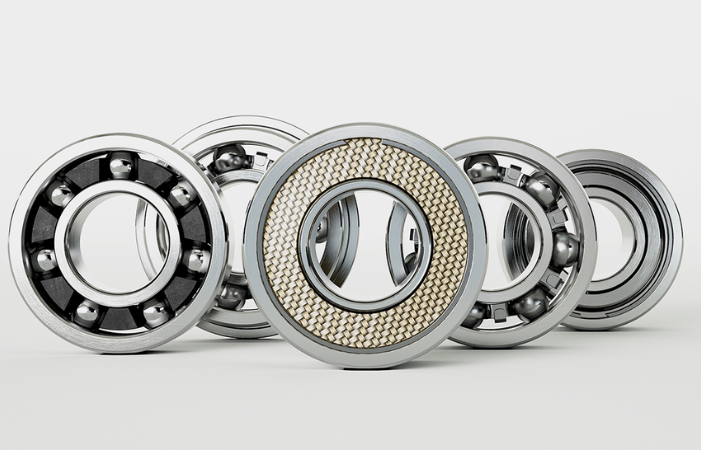
When we think of modern machinery and technology, we often overlook the small but vital components that make it all work seamlessly. One such unsung hero is the deep groove ball bearing. Though it may sound technical, this simple yet essential part plays a key role in ensuring smooth, efficient movement in countless devices — from electric motors to bicycles, automotive engines, and even high-tech equipment in aerospace. In this blog post, we’ll explore what deep groove ball bearings are, how they function, and why they are so crucial in modern engineering. What Are Deep Groove Ball Bearings? A deep groove ball bearing is a type of rolling-element bearing that is designed to reduce friction and support radial and axial loads. As the name suggests, these bearings have a “deep groove” raceway that allows them to accommodate both radial and axial forces — a feature that makes them versatile and widely used across industries. Deep groove ball bearings consist of four key parts: Outer Race (Outer Ring): This is the stationary part of the bearing that provides a track for the rolling elements. Inner Race (Inner Ring): This is the rotating part of the bearing, usually connected to the shaft. Ball Elements (Rolling Elements): These are the spherical balls inside the bearing that roll between the two raceways, allowing smooth motion. Cage: A component that keeps the rolling elements evenly spaced and prevents them from coming into contact with each other. The design of deep groove ball bearings allows them to handle both radial loads (forces perpendicular to the axis of rotation) and axial loads (forces parallel to the axis of rotation). This makes them incredibly versatile and ideal for a wide range of applications. How Do Deep Groove Ball Bearings Work? Deep groove ball bearings function through the rolling action of the ball elements between the inner and outer races. When a load is applied, it is transferred through the balls, minimizing friction and allowing smooth rotation. The groove in the races is designed deep enough to accommodate these rolling elements and distribute the load effectively. Because of the design, deep groove ball bearings can operate at high speeds with minimal noise and vibration. They are capable of handling both radial loads, where the load is applied perpendicular to the axis of rotation, and axial loads, where the load is applied parallel to the axis. In high-performance applications, deep groove ball bearings are often sealed or shielded to prevent the entry of dirt, dust, or moisture, ensuring that the bearing operates efficiently and has a longer lifespan. Why Are Deep Groove Ball Bearings So Popular? Deep groove ball bearings are widely regarded as one of the most versatile and cost-effective bearing solutions. Their popularity can be attributed to several key factors: 1. Versatility Deep groove ball bearings can handle both radial and axial loads, making them suitable for a wide range of applications. From simple consumer goods like washing machines to complex industrial machinery, they are used in various devices across industries. 2. High-Speed Capability Thanks to their design and smooth operation, deep groove ball bearings are capable of handling high-speed rotations without causing excessive heat or wear. This makes them ideal for high-speed applications such as motors, turbines, and even hard drives. 3. Low Maintenance Many deep groove ball bearings are sealed or shielded to prevent contamination, reducing the need for frequent maintenance. Their simple construction and ability to maintain smooth operation with minimal lubrication make them easy to maintain over time. 4. Cost-Effectiveness Compared to other types of bearings, deep groove ball bearings are relatively inexpensive, which contributes to their widespread use in a variety of applications, both commercial and industrial. 5. Long Lifespan Because of their simple, durable design and ability to handle both radial and axial loads, deep groove ball bearings tend to have a long lifespan. When maintained properly, they can offer years of reliable service. Applications of Deep Groove Ball Bearings Deep groove ball bearings are found in an extensive range of applications, including: Automotive: In car engines, gearboxes, wheel hubs, and power steering systems. Industrial Machinery: Motors, pumps, conveyors, and manufacturing equipment. Electronics: Computer hard drives, fans, and printers. Consumer Goods: Washing machines, vacuum cleaners, bicycles, and toys. Aerospace: Aircraft engines, landing gear, and auxiliary systems. Their ability to function under high speeds and various load conditions makes them indispensable across these sectors.
In the world of mechanics, efficiency, and force multiplication, the pulley system has stood the test of time as one of the most versatile and reliable solutions for lifting, transferring power, and controlling motion. Whether you’re lifting heavy loads in construction, transmitting power in industrial machinery, or moving belts in automotive systems, pulleys are integral to countless applications. In this blog post, we’ll explore what pulleys are, how they work, and why they continue to be an essential tool in modern machinery. Let’s dive into the mechanics and benefits of pulleys and discover why this simple yet effective tool remains a cornerstone of engineering design. What is a Pulley? A pulley is a simple machine consisting of a wheel with a grooved rim that holds a rope, cable, or belt. It is used to change the direction of the applied force, lift or move loads, or transmit rotational motion. While the concept of a pulley might seem basic, it’s a powerful tool that simplifies tasks and makes heavy lifting and mechanical operations more efficient. There are different types of pulleys, but they all serve the same fundamental purpose: to provide mechanical advantage by redirecting force, either to lift an object or transmit motion. Key Components of a Pulley: Wheel: The circular component that the rope or belt runs along. Groove: The rim of the wheel, designed to hold the rope or belt securely in place. Axle: The central shaft around which the pulley wheel rotates. Rope/Belt: The flexible component that moves through the groove of the pulley to transfer force or motion. Pulleys can be used alone or in combination to form more complex systems. These systems allow for different mechanical advantages depending on the arrangement of the pulleys. How Do Pulleys Work? Pulleys are often used to lift or move heavy loads by changing the direction of the force applied. Here’s how they work: Single Pulley (Fixed Pulley): A single fixed pulley changes the direction of the force. When you pull down on the rope, the load moves upward. However, the force required to lift the load remains the same as the weight of the load. Single pulleys are typically used when you need to change the direction of the force, such as pulling a rope to open a curtain or raise a flag. Movable Pulley: A movable pulley is attached directly to the load, and as you pull the rope, it moves with the load. This type of pulley reduces the amount of force needed to lift the load. Essentially, a movable pulley allows you to lift a load with less force by splitting the load across two lengths of rope. Block and Tackle (Combination of Fixed and Movable Pulleys): The block and tackle system uses both fixed and movable pulleys to provide even greater mechanical advantage. This system reduces the amount of force needed to lift heavy loads by distributing the weight across multiple pulleys, allowing for a significant reduction in effort. By using multiple pulleys in different configurations, you can increase the mechanical advantage, meaning you can lift heavier loads with less force. Types of Pulleys There are several types of pulleys, each designed for specific applications. Let’s explore the most common types: 1. Fixed Pulley A fixed pulley is mounted in a stationary position, and the rope or cable runs through the groove of the wheel. Fixed pulleys are primarily used to change the direction of force, as they do not reduce the amount of effort needed to move a load. They are commonly used in simple lifting mechanisms, such as flagpoles or in systems where the user needs to pull down on a rope to lift an object. 2. Movable Pulley Unlike fixed pulleys, movable pulleys move along with the load. This type of pulley reduces the amount of force required to lift an object by distributing the load over two lengths of rope. Movable pulleys are often used in combination with fixed pulleys to form block and tackle systems. 3. Compound Pulley (Block and Tackle) A compound pulley or block and tackle system combines both fixed and movable pulleys to provide a greater mechanical advantage. This system is widely used in lifting heavy loads, such as in cranes, ships, or in rigging systems. 4. Tapered Pulley Tapered pulleys are used primarily in belt drive systems, where the pulley is designed to drive a belt or transmission system. The tapered design allows the belt to grip more securely, which makes it ideal for use in applications such as automotive engines and conveyors. 5. Sheave Pulley Sheave pulleys are commonly used in applications that require heavy-duty lifting or movement, such as cranes or hoists. The sheave’s groove allows a rope or cable to run smoothly and carry heavy loads over a distance. Advantages of Pulleys Pulleys offer several advantages that make them an indispensable tool in a wide range of applications: 1. Mechanical Advantage By distributing the weight of the load across multiple pulleys, the mechanical advantage allows for lifting heavier loads with less effort. This is especially useful in construction, manufacturing, and material handling industries, where large or heavy objects need to be moved. 2. Force Direction Change Pulleys are an effective way to change the direction of applied force. For example, in a simple pulley system, pulling a rope downward can lift a load upwards, making it easier to perform tasks such as raising a flag or opening a garage door. 3. Space Efficiency Pulleys are compact and efficient machines that take up minimal space while delivering significant mechanical advantage. This makes them ideal for applications where space is limited but high performance is required. 4. Versatility Pulleys are used in many different industries and applications. From cranes and hoists to simple household tasks, pulleys play an essential role in moving loads and controlling mechanical systems. 5. Simplicity and Low Maintenance Pulleys have a simple design with few moving parts, which means they are relatively easy to maintain. Their durability and low
In the world of mechanical engineering, few components are as vital as the gearbox. Found in everything from automobiles to industrial machines, gearboxes are responsible for transferring power from one part of a system to another, all while adjusting speed, torque, and direction of motion. Whether you’re driving a car, operating a conveyor belt, or running a high-speed motor, the gearbox plays a central role in making sure everything works efficiently and effectively. In this blog post, we’ll explore what gearboxes are, how they work, the different types available, and their crucial applications in various industries. We’ll also highlight the key benefits of gearboxes and why they remain indispensable in power transmission systems. What is a Gearbox? A gearbox is a mechanical device used to transmit power and adjust the speed, torque, or direction of rotational motion. Essentially, a gearbox contains a set of gears that mesh together to change the ratio of input and output speed. This allows machinery to operate at optimal performance levels, whether it’s speeding up a rotating shaft, slowing it down, or altering its direction. In its most basic form, a gearbox consists of: Input shaft: Receives power from the engine or motor. Output shaft: Transfers power to the machinery or load. Gears: Interlocking components that adjust the speed and torque based on their size and arrangement. Housing: The external casing that holds the gears and protects them from dust, debris, and damage. By altering the gear ratio—i.e., the size of the input and output gears—a gearbox can either increase torque (for heavy lifting) or increase speed (for fast motion). The mechanical advantage provided by the gearbox makes it essential in a wide range of applications. How Does a Gearbox Work? Gearboxes operate based on the principle of gear ratios, which describe the relationship between the sizes of two meshing gears. The key to understanding how a gearbox works lies in how these gear ratios affect the output speed and torque: Torque: Torque refers to the twisting force that causes rotation. A gearbox can increase the torque by reducing the speed of the input, or decrease torque by increasing the speed of the output. Speed: Gearboxes can either reduce or increase speed, depending on the arrangement of the gears. A gearbox that reduces speed will increase torque and vice versa. For example, in a car transmission, the gearbox allows the engine’s rotational speed to be adjusted so that the car can move efficiently at different speeds. When you shift gears, the gears inside the gearbox are rearranged, changing the gear ratio to either increase or decrease the engine speed while adjusting the torque to the wheels. Key Functions of a Gearbox: Speed Reduction: Gearboxes are commonly used to reduce the speed of the input shaft to match the required output speed for the application. Torque Multiplication: Reducing speed usually increases the torque, making gearboxes ideal for applications requiring high torque output. Direction Control: Some gearboxes can also change the direction of the rotating shaft, which is particularly important in applications like conveyors, winches, or powered tools. Power Distribution: Gearboxes can split the power between multiple outputs, making them ideal for complex systems that need to drive multiple components simultaneously. Types of Gearboxes There are various types of gearboxes, each designed to meet specific application needs. The type of gearbox you choose depends on factors such as power requirements, space constraints, speed ratios, and load capacity. Here are the most common types: 1. Manual Gearbox Manual gearboxes are typically found in cars and trucks, where the driver manually selects gears to adjust speed and torque. They consist of a set of gears that are engaged via a clutch and gear shifter. This type of gearbox allows the operator to control the power output and engine speed more directly, providing a more engaging driving experience. 2. Automatic Gearbox Automatic gearboxes, or automatic transmissions, are used in most modern cars and trucks. Unlike manual gearboxes, automatic gearboxes shift gears automatically based on the vehicle’s speed and load. This makes driving easier and more convenient, especially in stop-and-go traffic. They use hydraulic systems and sensors to determine when to change gears. 3. Planetary Gearbox A planetary gearbox consists of one central “sun” gear, multiple “planet” gears, and a “ring” gear that surrounds them. These gearboxes are highly compact and efficient, making them ideal for use in small spaces where high torque and reduced speed are required. They are commonly used in applications like robotics, electric vehicles, and machinery requiring high torque in a compact form factor. 4. Helical Gearbox Helical gearboxes use gears with teeth that are cut at an angle to the axis of rotation, which allows for smoother and quieter operation compared to straight-cut gears. These gearboxes are ideal for high-speed applications and are commonly used in automotive, industrial, and material handling equipment. 5. Worm Gearbox In a worm gearbox, a spiral-shaped gear (the worm) meshes with a gear (the wheel) that resembles a toothed wheel. Worm gearboxes offer high torque multiplication, making them ideal for applications that require a large reduction in speed. They are also self-locking, which prevents the load from reversing direction without power, making them ideal for lifts, hoists, and conveyors. 6. Bevel Gearbox A bevel gearbox uses bevel gears, which have angled teeth, to transmit power between shafts that are not parallel. These gearboxes are used when you need to change the direction of a shaft’s rotation, such as in automotive drivetrains, power tools, or machinery with multiple axes of rotation. 7. Cycloidal Gearbox A cycloidal gearbox uses a cycloidal drive, which is a type of motion that provides a smoother, more efficient transfer of power. Cycloidal gearboxes are often used in heavy-duty applications like cranes, conveyors, and industrial robots where high torque and reliability are essential. Applications of Gearboxes Gearboxes are essential components in a wide range of industries, playing a critical role in power transmission systems across multiple applications. Here are just a few industries where gearboxes are crucial:
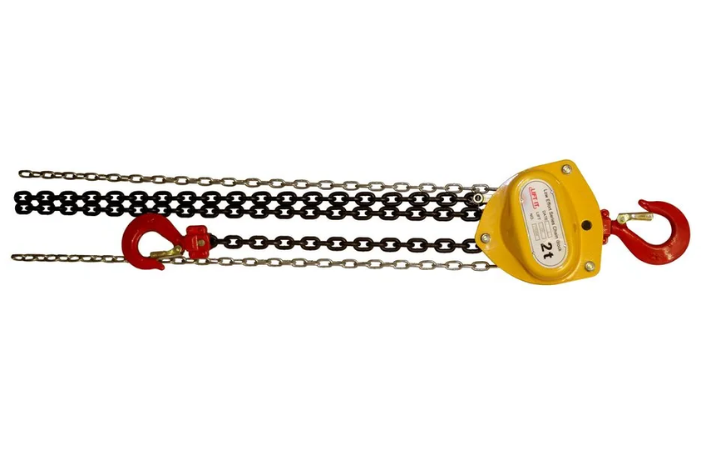
When it comes to heavy lifting and material handling, pulley block systems are indispensable. These mechanical devices, which integrate pulleys, ropes, and sometimes hooks or shackles, offer a simple yet highly effective means to lift, move, or redirect heavy loads. Whether you’re hoisting construction materials on a job site, operating a crane, or rigging a system for lifting equipment, pulley blocks are a core element in ensuring efficiency and safety. In this blog post, we’ll dive into the pulley block system, explain how it works, explore its benefits, and review the different types of pulley blocks used across various industries. What is a Pulley Block? A pulley block is a type of mechanical assembly that houses one or more pulleys (or sheaves) to lift or move heavy loads using ropes, cables, or chains. These blocks often feature a frame that holds the pulley in place, along with a rope or cable running through it to transfer force. The design of the pulley block allows for better mechanical advantage, making it easier to lift objects that would otherwise require an excessive amount of force. Key Components of a Pulley Block: Pulley (Sheave): The wheel with a grooved rim that holds the rope or cable and redirects the force applied to it. Frame/Block Housing: The structural housing that contains and secures the pulley or multiple pulleys. Rope/Cable: The flexible component that runs through the pulley to lift or move the load. Shackles/Hooks: Often included to secure the block to the load or mounting point. Bearings or Bushings: Help reduce friction for smoother operation. Pulley blocks come in a variety of designs, from single-pulley configurations to complex multiple-pulley setups, all designed to increase the lifting capacity and mechanical advantage. How Do Pulley Blocks Work? Pulley blocks operate on the same principle as other pulley systems—by changing the direction of applied force and allowing for mechanical advantage. Here’s how a typical pulley block system functions: Rope/Cable Application: A rope or cable is passed through the pulley(s) of the block. As force is applied to one end of the rope, the block redirects the force to move the load. Lifting: By pulling the rope, the load is either raised or moved. Depending on the number of pulleys in the system (a single-pulley or block and tackle system), the force required to lift the load can be significantly reduced. Mechanical Advantage: With multiple pulleys, the force needed to lift a load decreases. For example, in a block and tackle system, the load is distributed across several ropes, multiplying the mechanical advantage and making it easier to lift heavier loads. Load Distribution: The force applied to the rope is distributed across the pulleys and cable, allowing the load to be evenly balanced, which reduces strain on the system and minimizes the risk of damage or failure. Types of Pulley Blocks Pulley blocks come in several configurations, depending on the specific application and lifting requirements. Here are the most common types: 1. Single Pulley Block A single-pulley block contains just one pulley and is primarily used to change the direction of force or provide a basic lifting mechanism. While it does not reduce the effort required to lift a load, it can make it easier to handle heavy loads by redirecting the pulling force. This is commonly used in simple applications such as lifting small objects or creating a mechanical advantage in combination with other systems. 2. Double Pulley Block A double-pulley block includes two pulleys within the block assembly, which can either be fixed or movable. The additional pulley helps distribute the load more evenly, reducing the force needed to lift heavy objects. It can be used as part of a more complex system, like a block and tackle, to improve mechanical advantage and make lifting easier. 3. Block and Tackle A block and tackle system consists of multiple pulleys arranged in a configuration that provides a higher mechanical advantage. The pulleys are connected to a rope or cable, and when the rope is pulled, the load is lifted with less effort. Block and tackle systems are used for heavy-duty lifting applications, such as in cranes, winches, and hoists. 4. Crane Blocks Crane blocks are specifically designed for use with cranes and hoisting systems. These are usually heavy-duty, multi-pulley blocks that are used to lift massive loads, such as in construction, shipping, or heavy industry. Crane blocks are often equipped with hooks or shackles to attach to the load and are built to handle the significant forces generated during lifting operations. 5. Snatch Blocks A snatch block is a type of pulley block with a hinged side, allowing the rope or cable to be easily inserted or removed without having to thread it through the pulley. This feature makes it incredibly useful for rigging setups, towing, or when the rope needs to be repositioned quickly. Snatch blocks are commonly used in recovery operations and marine applications. 6. Cable Blocks Cable blocks are designed to handle cables rather than ropes. These blocks are typically used in applications where the load involves a strong, steel cable, such as in winching or crane operations. The cable is run through the pulley, and the block provides the necessary mechanical advantage to pull or lift the load efficiently. Benefits of Using Pulley Block Systems Pulley block systems are highly effective tools for lifting, moving, and distributing loads. Some of the key benefits include: 1. Increased Mechanical Advantage By incorporating multiple pulleys in a block system, the mechanical advantage is increased, meaning that less force is required to lift a heavy load. This is especially beneficial in industries like construction, where large, heavy loads need to be moved with minimal physical effort. 2. Enhanced Efficiency Pulley blocks help improve the efficiency of lifting and load-handling tasks by providing smoother motion, reducing friction, and distributing the load evenly. This reduces the wear and tear on both the equipment and the operator. 3. Versatility in Application Pulley block systems can be used in a